

How might we expand awareness and access of supportive care services at BC Cancer through co-design with patients and families navigating cancer treatment?
(2025-ONGOING TO INCLUDE HEALTH CARE PRACTITIONERS)
CO-DESIGNED WITH
EMILY CARR HEALTH DESIGN LAB
CAYLEE RABER
GEORGIA MCWILLIAMS
SRIVIDYA SURYANARAYAN
AUDREY ALLANSON
PROJECT TEAM
JONATHAN AVERY
Provincial Manager, Supportive Care Services
ALAN BATES
Medical Director, Supportive Care Services
TAMMY HOEFER
Director, Patient and Family Partnerships and Experience
ISHA JOSHI
Coordinator, Patient and Family Partnerships and Experience
JESSICA JIMMO
Patient Advisor
HELEN ZHANG
Patient Advisor
We are deeply grateful to the 39 individuals with lived experience of cancer treatment, either as patients or as loved ones of patients, who directly contributed to this work by sharing their insights and ideas through workshops held in April 2025, follow-up validation meetings and email correspondence. We sincerely thank each of them for their time, thoughtfulness, and enthusiastic participation in helping improve the cancer treatment experience for others.
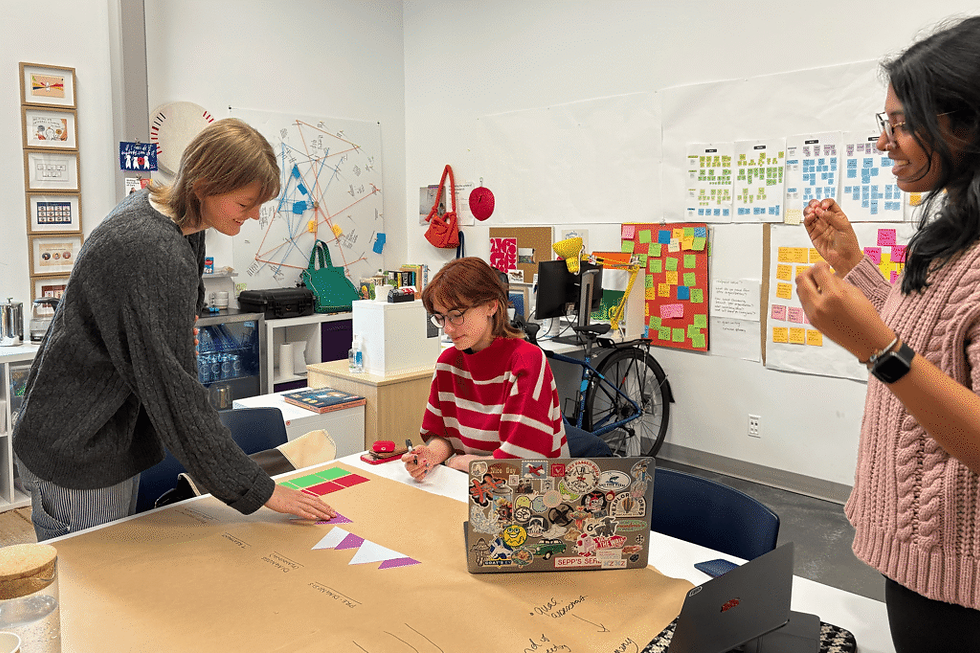
Beginning in September 2024, this project seeks to deepen BC Cancer’s understanding of supportive care from the perspectives of patients and their families. Supportive Care Services at BC Cancer complement medical treatment by addressing a wide range of physical, emotional, psychological, social, spiritual, and practical challenges caused by cancer and its treatment. These services are designed to improve quality of life, guide patients and their families through their cancer journeys, and support recovery.
Working in collaboration with people who have lived experience of cancer treatment, our goal is to identify opportunities to raise awareness and improve the accessibility of Supportive Care Services offered by BC Cancer provincially.

This project required an immense amount of communication and collaboration between parties.
RESEARCH

People with cancer can face significant challenges during and after cancer treatment, including physical, informational, emotional, psychological, social, spiritual and practical challenges.
At BC Cancer, Supportive care services are any program or service that helps improve quality of life throughout the cancer care experience for patients and family. For example, supportive care services can include support with symptom and pain management, therapy and counselling, and nutrition support.
CONCEPT
This project was designed to be easily manufacturable, using simple repetitive shapes to inspire creativity within the context of refugee camps.
We were excited by themes of balance and cognitive learning through play. We wanted to make an object that could be used singularly or for social play, as well as allow for the introduction of found materials (ie. tieing string to the edges)


Although simple, the idea of a modular spinning top appealed to us for its endless versatility.
Some of the affordances we came up with are:
- It's the ability to learn motor skills and balance through trial and error of the different discs, finding which configuration spun the best
- Using the spinning as a gamified timer
- Configured to be a wheel and axel
- Having space for outside materials to be tied onto the rings, placed inside, etc.
These are just a few of the considerations we thought of, but the hope is that children, in their endless creativity, would find the way to play that brought them the most joy, our job was to simply facilitate.

CREATION
The colours and graphics chosen are based on traditional Sudanese dance attire. There are 60+ different ethno-tribal groups in Sudan, each with their own dress and dance, although a common thread is jumping and spinning, which matches the movement of our object. The patterns are designed to dance and morph as the object spins similarly to these dances.


All aspects of TOPO were heavily considered for ease of manufacturing, allowing for many to be produced quickly and cheaply.


Note: This is an ongoing project!
Currently, our team is working with the University of British Columbia Psychology Department and The Power of Play to iterate and send this piece to South Sudan refugee camps in February 2025.


